A short list. We would rather describe two projects properly than name twenty.
Straddle
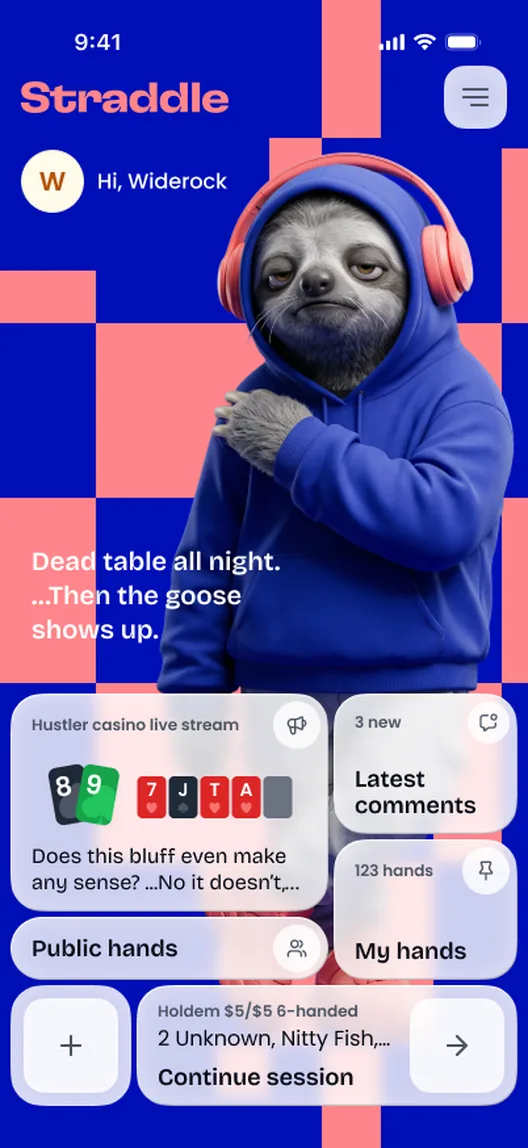
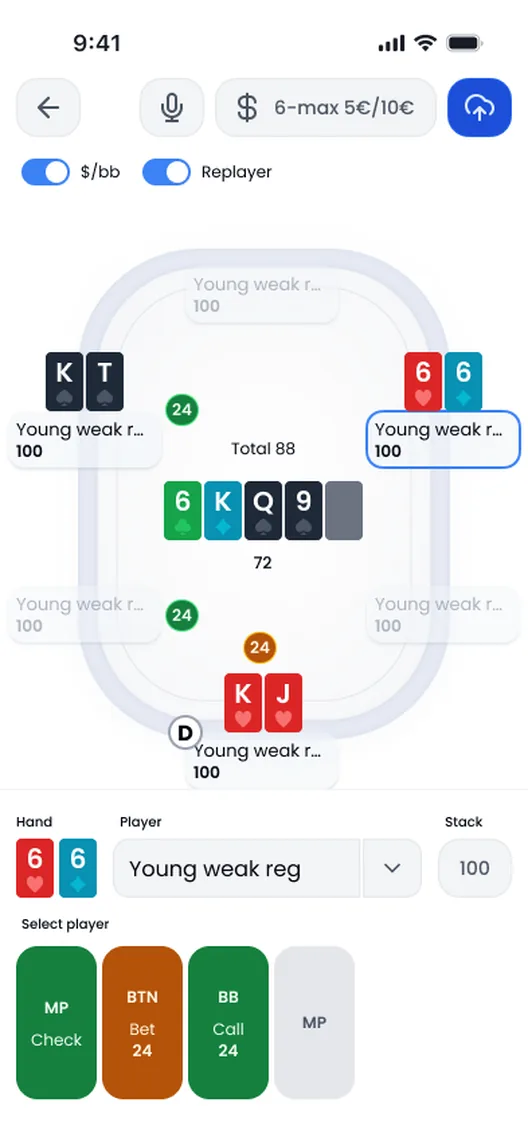
A hand history is a dense object. Positions, stack sizes that move on every street, the order and size of every bet, the board — and none of it means much in isolation. Players read these back after a session, on a phone, usually while half-doing something else.
That is the whole design problem. Shrink it all to fit and nothing reads. Hide it behind taps and reviewing a session turns into work, which means it stops happening.
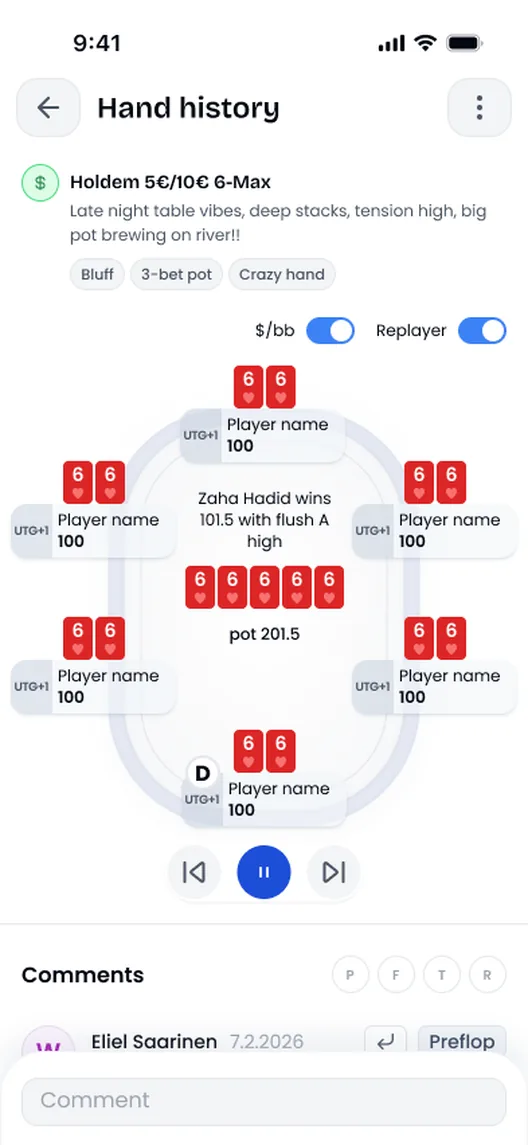
So a hand is not a page you read, it is a sequence you step through. The table holds still and the money moves — the replayer walks street by street, the pot updates in the middle, and one toggle switches every number between euros and big blinds so the same hand reads correctly whatever stake you think in.
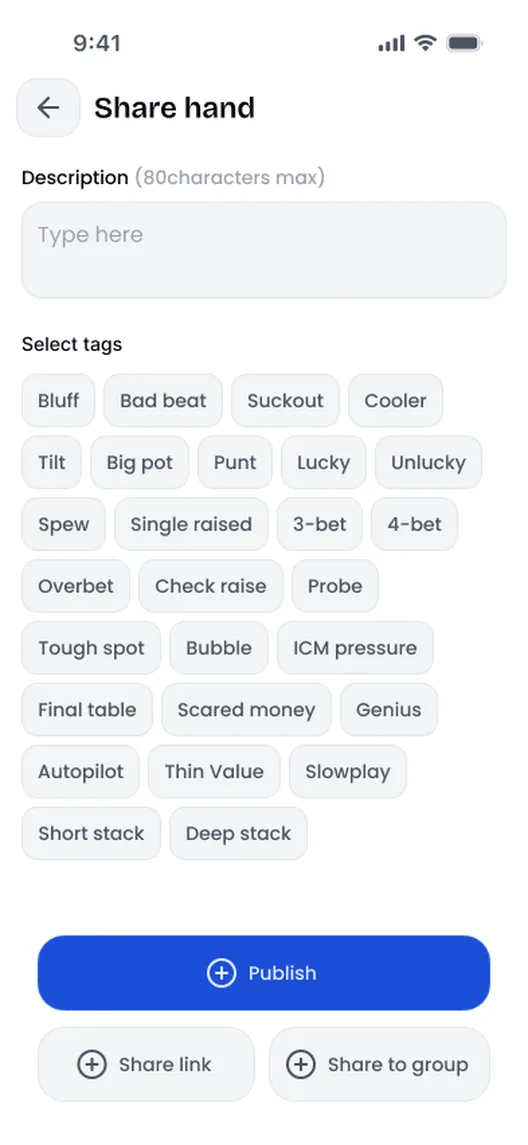
Hands are worth arguing about, so publishing one takes a description and a few tags, and the comments sit directly under the replayer while the hand is still in front of you.
We design Straddle and we ship it, so there is no handover, and no one else to blame for the parts that are still wrong.
Mindly
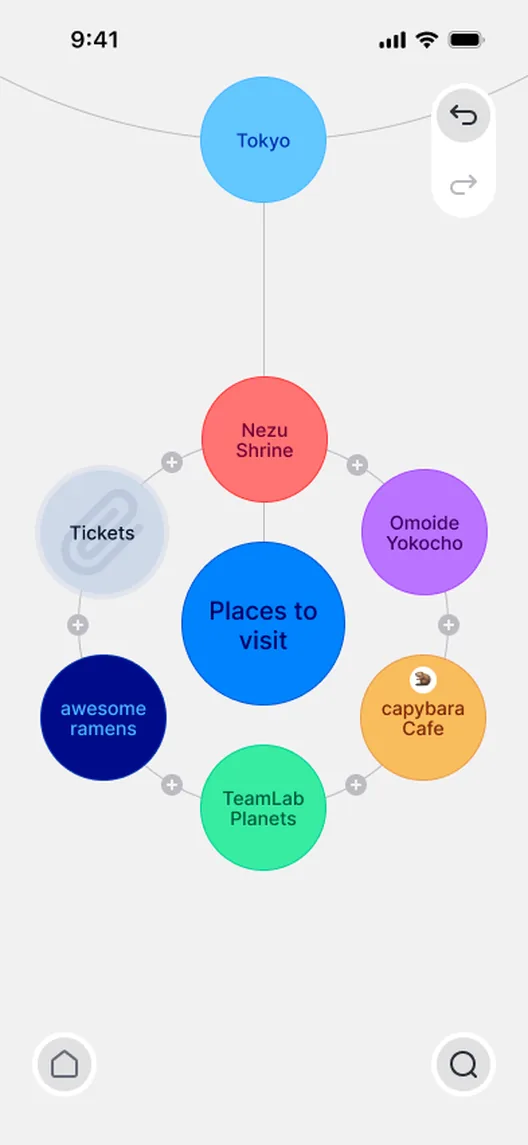
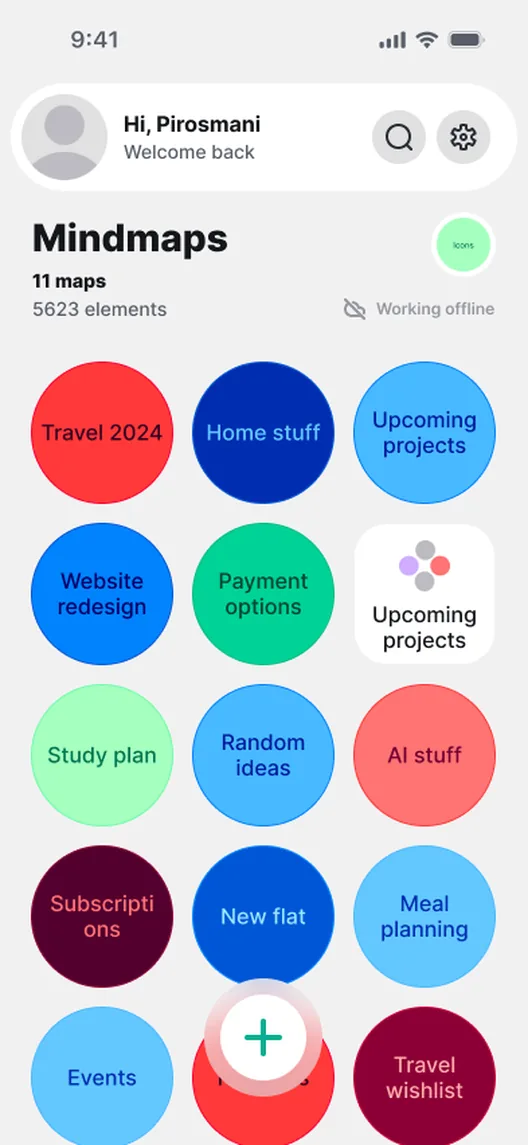
Mindly maps ideas as orbits rather than lists. A core idea sits at the centre, related thoughts circle it, and any one of them can become a centre of its own. The hierarchy is strict underneath, but you read it as a shape.
The metaphor is also the hard part. A radial layout is legible at three levels deep and chaotic at six. Zooming has to feel like moving your attention rather than losing your place. And a thought has to be captured in the couple of seconds before it goes — on a phone, one-handed, usually mid-sentence.
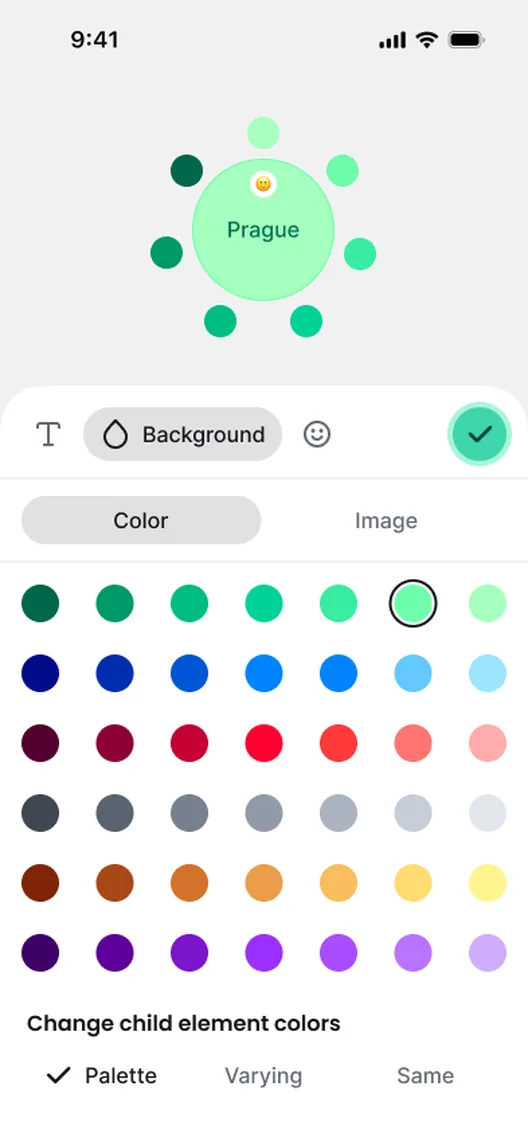
Colour is the only thing grouping a branch, which makes how it inherits a structural decision rather than a styling one — a parent’s palette can pass down to its children, vary across them, or hold. Most of the work sat in rules like that: how a branch is added, how it is revealed and hidden as you move down it, and what still reads at a glance when it is collapsed.
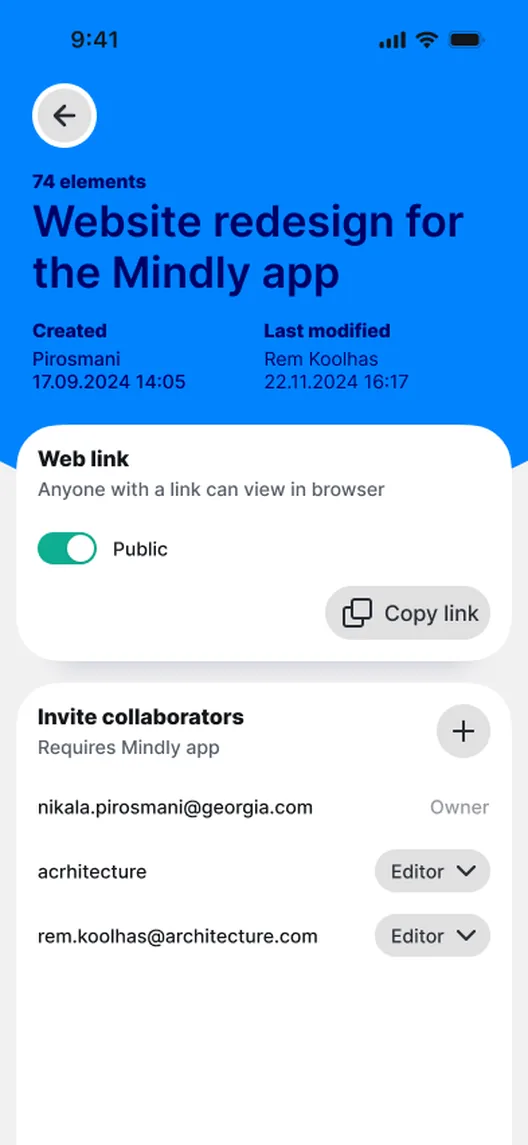
Sharing had to fit the same canvas. A map goes out as a public link or takes named collaborators with roles, without introducing a second way to navigate the thing.
If your product is somewhere in this territory, the fastest way to find out whether we are useful is to send us the thing you are worried about.
contact@wallride.fi